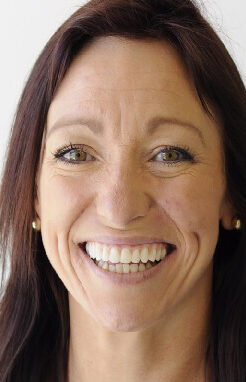
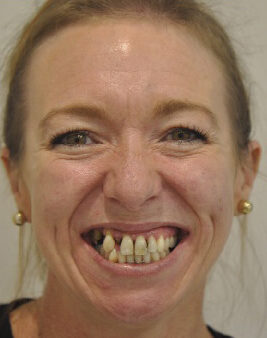
More than just before and after photos! View our patient cases to learn more about our approach to improving oral health.

PATIENT CASE

KATHY

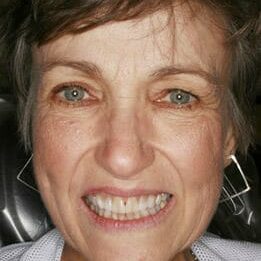
Kathy is a healthy and active retired teacher who came to us as a new patient with the chief concern that she “did not like the color of her teeth.” This is a common concern for patients, but we always want to ask specifics on what about her teeth she wanted to improve.

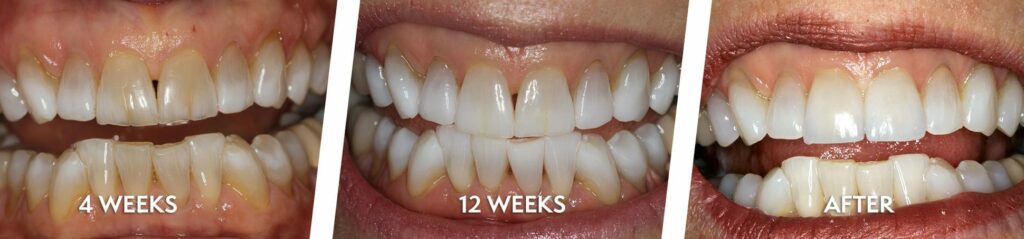
After some thought, she “was concerned with the cracks on the upper front 2 teeth, the ‘black triangle’ between the 2 front teeth and wear that shortened the height of these teeth.” The red arrows point out some of these concerns. Kathy has tetracycline staining in her teeth. Tetracycline is an antibiotic that causes discoloration and greying of the teeth. The tetracycline bonds deep within the teeth and is one of the most difficult causes of dark teeth to treat.

Kathy initially inquired about placing veneers on the upper “social six” anterior teeth. These are the teeth that most often show when a person smiles. However, our process first starts with an accurate diagnosis of all the possible concerns and the potential solutions to fix those problems. The patient can then decide which treatment provides them with the best outcome.

THE PROBLEMS

First, Kathy has a beautiful, wide smile. She shows more than the “social six” when she talks and smiles. This is not a problem at all, but we do need to account for the fact that she shows a lot of her teeth when she smiles and talks.

Second, Kathy also has some recession on her upper teeth with exposed root surfaces. These root surfaces are not sensitive and do not bother her, but would certainly affect the overall result should we decide to place veneers on these teeth as the gum line has changed throughout her mouth. Third, while Kathy has a very nice smile with teeth that are generally shaped well and in good position, she does not like the shape and wear on her upper two front teeth.


Potential Solutions

  1. We first discussed veneers, as this would take care of the black triangle between her front teeth, change the color of the teeth, and deal with the wear and cracking. Also, the root surfaces would be covered up. An advantage of this plan is that we can do this relatively quickly and the white color will last for a long time. The disadvantages are that I believe we would need to do much more than 6 front teeth to get a uniform matching smile. Also, Kathy did not like the idea of cutting down perfectly good teeth in order to change the color.
  2. A second option was to use KOR Ultra-T whitening to whiten the teeth, followed by gingival grafting to cover the root surfaces. Veneers would then be placed on the upper front 2 teeth to fill in the black triangle, give length to the teeth and cover the visible cracks. This treatment plan is conservative in that teeth do not need to be cut down and less expensive than veneers. Also, all teeth will have a uniform color throughout the mouth. The main disadvantage is time. KOR whitening is the best material I have found for tetracycline stains, but it takes several months to do it right. Sensitivity can also be a problem, but I have found the KOR desensitizer to be helpful for many patients.
  3. The most conservative option would be KOR Ultra-T whitening followed by composite fillings to fill in the black triangle and the cracks. Composite often requires replacement more frequently than veneers but is conservative and esthetic.

OUR SOLUTION

Kathy decided on option 2. We started with custom bleach trays and the KOR Ultra-T system. After 4 weeks we started to see considerable improvement.

At this point, Kathy felt her gingival recession was not as much of a concern to her. So she decided against gingival grafting. The gingiva is healthy, so we supported this decision. Although the crack lines in the front teeth were less noticeable, she still wanted to fix these. We therefore decided on 2 veneers on the front teeth.

CONCLUSION

There are many things we could have done for Kathy to improve her function and aesthetics. The really important part for our office is a thorough diagnosis of what the patient really wants to improve. Some patients have functional issues, such as tooth pain, jaw pain and headaches. Others have one small thing that has bothered them for years. Getting the diagnosis right really helps the dentist and patient make a decision that is ideal for their particular situation.

PATIENT CASE

john doe

John Doe is a new patient who recently visited our clinic with concerns about his dental health. Like many individuals, he had experienced discomfort for some time but was unsure of the best treatment approach. His visit marked the beginning of his journey toward better oral health, and he was eager to explore his options.

A potential solution for John could have been general cleaning and routine check-ups to manage his discomfort temporarily. While this approach might have offered short-term relief, it would not have fully addressed the root of his dental concerns. Without a more comprehensive treatment plan, John risked experiencing recurring issues that could affect both his health and confidence.

pROBLEM
&
POSSIBLE SOLUTION

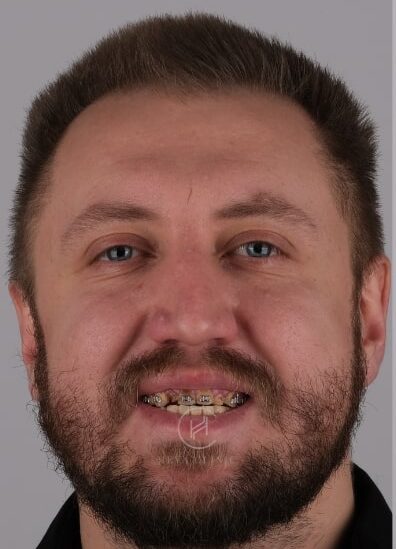
During his initial consultation, John explained that his teeth had become increasingly sensitive to hot and cold foods. He also noticed mild discomfort when chewing and occasional gum irritation. While he had tried using over-the-counter products in the past, such as sensitivity toothpaste, these provided only limited relief. Without professional attention, his symptoms were beginning to interfere with his daily comfort and could potentially lead to more serious dental complications.


Potential Solution

When John first described his concerns, there were a few potential solutions that could have been recommended to provide him with short-term relief:

  • Restorative care for the affected teeth to repair damage.

  • Professional cleaning and fluoride treatment to strengthen enamel and reduce sensitivity.

  • Preventive education on proper brushing, flossing, and dietary habits to maintain oral health.

  • Scheduled follow-ups to monitor progress and prevent recurring problems.

This comprehensive approach not only addressed John’s current pain but also helped him feel reassured about his long-term dental health.

Our Solution

Instead of relying on temporary measures, we provided John with a personalized treatment plan tailored to his needs. After a thorough dental examination, our team identified early signs of tooth decay and gum sensitivity. We recommended a step-by-step approach to ensure both immediate relief and long-term protection

Restorative care

for the affected teeth to repair damage.

Professional cleaning and fluoride treatment

to strengthen enamel and reduce sensitivity.

Preventive education

on proper brushing, flossing, and dietary habits to maintain oral health.

Scheduled follow-ups

on proper brushing, flossing, and dietary habits to maintain oral health.

Conclusion

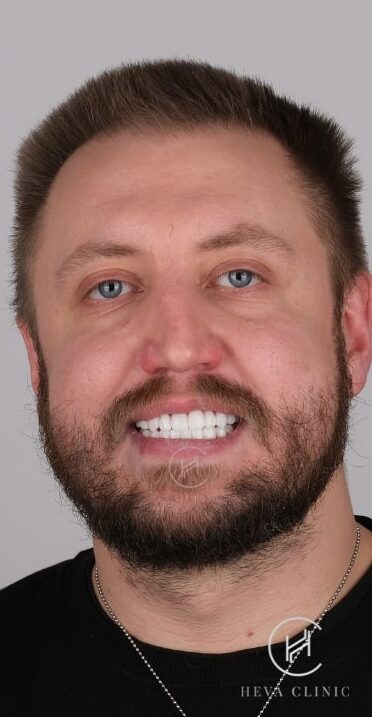
John Doe’s case highlights how important it is to move beyond temporary fixes and provide patients with lasting solutions. By identifying the problem, considering alternatives, and implementing a personalized treatment plan, we were able to transform his dental experience into one of confidence and optimism. His journey demonstrates that with proper care and attention, new patients can overcome initial concerns and achieve healthier, brighter smiles.

BEFORE

AFTER

PATIENT CASE

Jane Doe

Jane Doe is another new patient who visited our clinic after struggling with dental challenges that affected both her health and confidence. For years, she had been conscious about the alignment of her teeth, often feeling hesitant to smile in social settings. Her hesitation to seek help earlier was rooted in the belief that treatment might be too complicated or costly. However, Jane’s decision to finally book an appointment was a turning point in her journey toward achieving the healthy, confident smile she had always wanted.

pROBLEM
&
POSSIBLE SOLUTION

Jane Doe is another new patient who visited our clinic after struggling with dental challenges that affected both her health and confidence. For years, she had been conscious about the alignment of her teeth, often feeling hesitant to smile in social settings. Her hesitation to seek help earlier was rooted in the belief that treatment might be too complicated or costly. However, Jane’s decision to finally book an appointment was a turning point in her journey toward achieving the healthy, confident smile she had always wanted.

Potential Solution

At the start of her case, there were several possible solutions that could be considered:

  • Basic orthodontic consultation – to explore traditional braces as a corrective option.

  • Cosmetic approaches – such as veneers or bonding, which could improve aesthetics but not fully address functionality.

  • Short-term aligners – to provide partial correction of her smile.

  • Improved oral hygiene routine – focusing on brushing and flossing techniques to help reduce the risk of gum problems in the meantime.

While each of these options offered benefits, some would only provide a cosmetic fix without solving the deeper alignment issue.

Our Solution

After carefully reviewing Jane’s needs, our team recommended a customized orthodontic treatment plan using clear aligners. This solution not only worked on straightening her teeth over time but also offered a discreet option that fit her lifestyle. Alongside the aligners, Jane received:

Professional cleaning

to ensure a healthy foundation before treatment.

Personalized hygiene guidance

to prevent plaque buildup during her orthodontic journey.

Scheduled progress checkups

to monitor alignment improvements.

Conclusion

Jane Doe’s case highlights how important it is to move beyond temporary fixes and provide patients with lasting solutions. By identifying the problem, considering alternatives, and implementing a personalized treatment plan, we were able to transform his dental experience into one of confidence and optimism. His journey demonstrates that with proper care and attention, new patients can overcome initial concerns and achieve healthier, brighter smiles.

BEFORE

AFTER